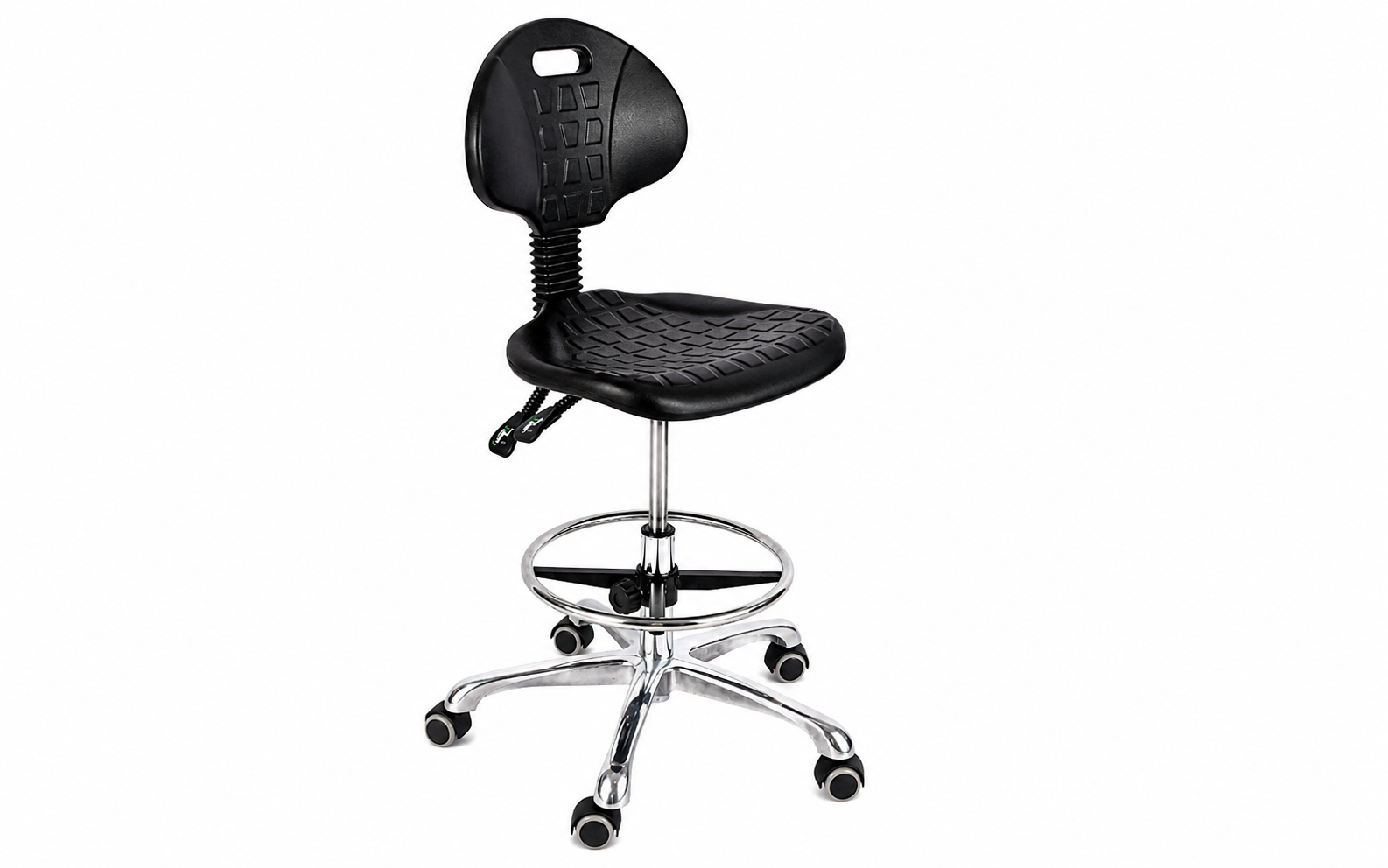
Argentine companies are becoming more disciplined when choosing laboratory chair suppliers because procurement teams now evaluate supplier risk as carefully as product price. In B2B projects, a chair order may serve laboratories, universities, pharmaceutical rooms, food testing areas, hospitals, and industrial inspection stations, so buyers need standards that reduce uncertainty before approval. The first standard is specification clarity. Suppliers must provide accurate dimensions, material descriptions, adjustment ranges, warranty terms, packaging information, and delivery commitments in a format that can be shared with technical users and purchasing managers. When a distributor offers an industrial polyurethane with chrome foot ring and casters adjustable laboratory chair, the buyer wants proof that the model matches bench height, cleaning routines, user movement, and replacement planning. This procurement behavior helps Argentine companies avoid vague offers and choose suppliers that can support professional decisions, not only discount negotiations.
Another influential standard is supplier documentation discipline. Argentine B2B buyers increasingly expect quotations, invoices, technical sheets, product photos, carton data, and after-sales terms to remain consistent from inquiry to delivery. Incomplete documentation can delay internal approval, customs preparation, warehouse receiving, or budget release, especially when the customer is a public institution or a large private organization. Distributors that serve regional clients should prepare reusable procurement files for each approved model so every stakeholder receives the same information. For an industrial polyurethane with chrome foot ring and casters adjustable laboratory chair, the file can include seat surface details, chrome ring function, caster type, height adjustment guidance, spare part references, and recommended laboratory applications. This makes the supplier easier to trust and helps buyers compare offers based on reliability, traceability, and operational fit.
Procurement standards are also shifting toward total value assessment. Companies in Argentina no longer want to approve a chair simply because it has the lowest unit price. They are asking whether the supplier can guarantee consistent batches, provide replacement components, support sample testing, explain installation needs, and respond quickly after delivery. A supplier with good service standards can reduce hidden costs caused by wrong specifications, delayed responses, missing parts, or repeated reorders from different departments. Dealers can strengthen their B2B position by presenting evaluation checklists that cover product suitability, warranty process, delivery reliability, communication speed, and future reorder support. This kind of content is useful for Google visibility because serious buyers search for guidance on laboratory chair supplier selection, procurement requirements, and professional seating standards in Argentina before contacting vendors. It also gives dealers a transparent way to explain why prepared suppliers reduce approval pressure, protect budgets, and help laboratories avoid last minute purchasing decisions when new equipment, audits, academic cycles, or production deadlines create urgent seating demand. This also supports cleaner comparisons and faster commercial decisions for demanding professional buyers.
The final standard influencing supplier choice is long-term partnership potential. Buyers prefer suppliers that understand Argentine market conditions, regional delivery challenges, institutional approval processes, and the need for consistent product records across future projects. If a laboratory approves an industrial polyurethane with chrome foot ring and casters adjustable laboratory chair, the supplier should help maintain the model reference, record customer feedback, recommend reorder timing, and prepare matching units for new rooms or branch expansions. This support allows procurement teams to standardize seating decisions instead of restarting evaluation with every purchase. For distributors, meeting these standards creates stronger trust, better margin protection, and higher repeat conversion. Argentine companies are choosing laboratory chair suppliers that combine clear technical data, dependable documentation, service responsiveness, and practical B2B understanding, because those standards directly affect project efficiency, customer satisfaction, and long-term purchasing confidence across laboratories, campuses, clinics, manufacturers, and regional reseller networks.
READ MORE