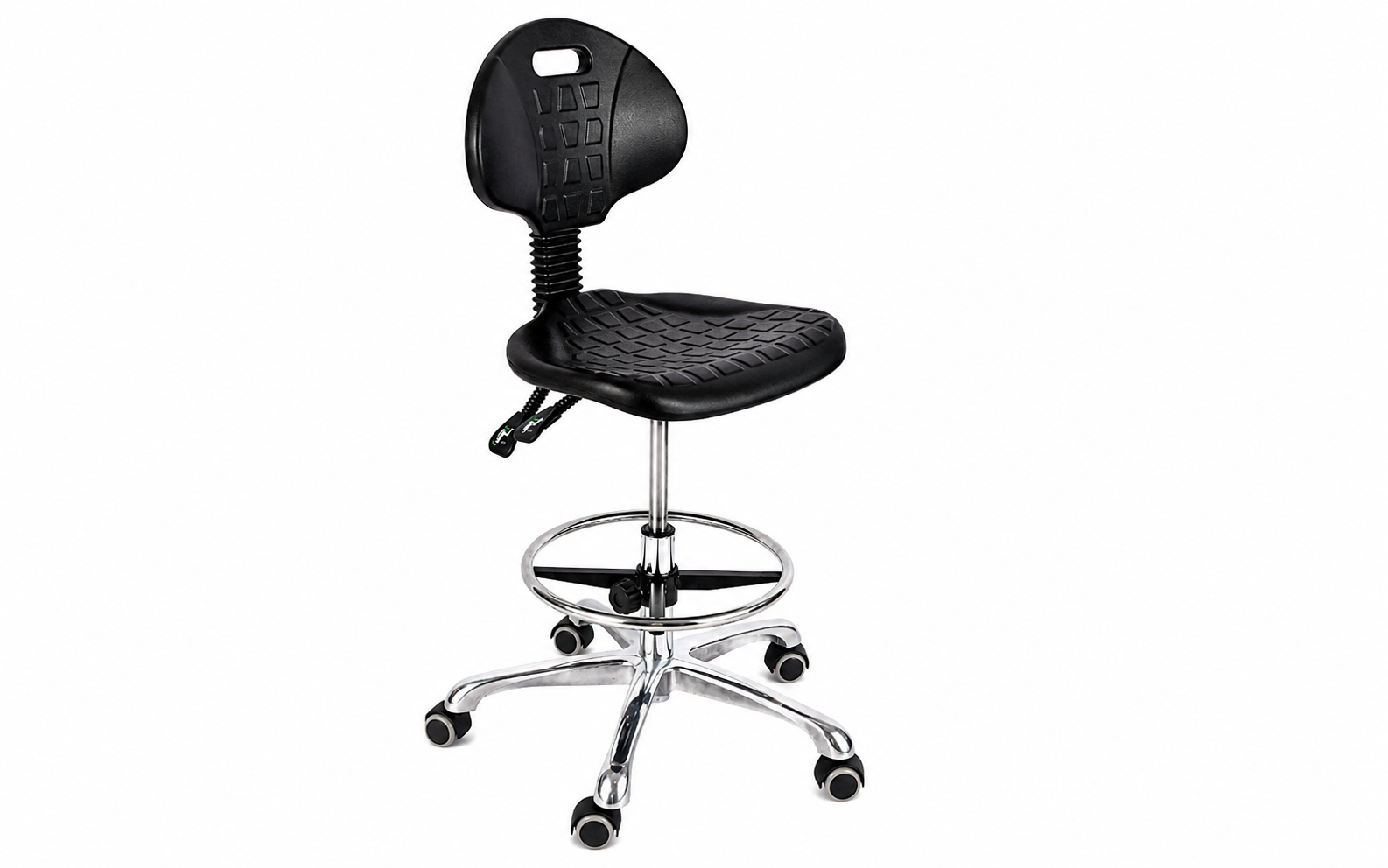
For laboratories in Argentina, selecting suitable chair solutions based on space planning begins with observing how people actually move, sit, reach, and share equipment during daily work. B2B buyers should not choose seating only from a catalog image, because a chair that looks acceptable may block narrow aisles, sit too low for fixed benches, or create cleaning obstacles around storage cabinets. A practical planning review should measure bench height, under-counter clearance, door widths, instrument positions, traffic flow, and the distance between preparation, analysis, and documentation zones. When a distributor recommends an industrial polyurethane with chrome foot ring and casters adjustable laboratory chair, the proposal should explain how the chair fits the room layout, not only the product specification. This helps Argentine customers visualize comfort, safety, and efficiency before ordering multiple units, while giving dealers a stronger B2B argument for professional seating in projects with strict budgets and deadlines.
Space planning also requires laboratories to separate workstations by activity. Sample preparation benches may need elevated seating with foot support, while microscope areas may need stable posture and limited movement. Computer documentation corners may need longer sitting comfort, and training rooms may require flexible chairs that can be rearranged quickly for different class sizes. Argentine distributors can support clients by preparing a room-by-room seating map that links each chair type to user tasks, floor surface, cleaning schedule, and expected occupancy. If the selected option is an industrial polyurethane with chrome foot ring and casters adjustable laboratory chair, the map can show where caster mobility is useful, where height adjustment improves reach, and where the chrome foot ring supports elevated bench work. This method reduces random purchasing and helps procurement teams justify the selected configuration across departments with clearer internal approval documents and fewer specification revisions later.
Another important factor is density. Many laboratories want to fit more people into limited areas, especially universities, private testing centers, and quality control rooms serving growing production lines. However, too many chairs can reduce movement, increase collision risk, and make cleaning harder. B2B suppliers should help Argentine buyers calculate practical chair quantities instead of simply selling the highest possible number. The review can include turning radius, drawer access, emergency paths, storage clearance, and the space needed when users stand up or roll between instruments. Distributors can also offer sample placement before full purchasing, allowing technicians to test whether the chair supports the planned workflow during peak teaching hours, audit preparation, and intensive production testing periods. This consultative approach creates better customer satisfaction, fewer wrong orders, and stronger long-term trust than a price-only sales model. It also helps resellers explain why professional planning protects laboratories from hidden operating costs.
For long-term value, space planning should be connected with future expansion. A laboratory may start with one room, then add new benches, instruments, students, technicians, or testing services within the next year. Suppliers should recommend chair solutions that can be repeated without changing the room standard. When the industrial polyurethane with chrome foot ring and casters adjustable laboratory chair becomes the approved reference, dealers can record seat height, floor conditions, bench compatibility, and reorder quantities for future projects. This gives Argentine laboratories a scalable seating plan and helps distributors forecast demand more accurately. It also supports Google-friendly content around laboratory space planning, B2B chair selection, and workstation efficiency in Argentina. A chair chosen through layout logic becomes more than furniture; it becomes part of a dependable laboratory workflow solution that protects budgets, improves comfort, and supports repeat business for dealers, buyers, and regional service partners across Argentina's competitive laboratory furniture market during future campus expansion and renovation discussions.
READ MORE